- Mon - Fri: 9:00AM - 5:30PM
- 0800 047 2610
UPVC Windows, Doors & Repairs in Gateshead, North East

Composite Doors
A composite door is, at this point, the most popular choice we fit for front doors across Gateshead, Newcastle, Durham and Northumberland - and it's popular for good reason. It combines a solid, insulated core with a tough outer skin that resists warping, fading and knocks far better than a standard UPVC door, while still being available in the same wide range of colours and styles. For a lot of homeowners it's the door that finally looks as good in ten years as it did on day one.
This page covers what a composite door actually is, how it compares to standard UPVC, and what to expect from having one fitted. If you're after a simpler UPVC front, back or external door instead, see our new door installation page.
What's Included
- Full survey and measure-up before any quote
- Composite door supply and installation
- A wide range of colours, styles and glazing options
- Multi-point locking as standard
- Removal and disposal of your old door and frame
- Full fitting, sealing and finishing by our own tradesmen
Ready to get started?
Free, no-obligation quotes across Gateshead, Newcastle, Durham & Northumberland.
What Is a Composite Door, Actually?
Where a standard UPVC door is built from a single hollow or foam-filled UPVC profile, a composite door is built up in layers - typically a solid timber or insulated foam core, wrapped in a glass-reinforced plastic (GRP) skin, with a UPVC frame around the edge. That layered construction is what gives it its two main advantages over standard UPVC: it's significantly more rigid, so it doesn't flex, warp or bow the way a UPVC door can over years of sun and rain exposure, and it's a better insulator, since the solid core doesn't lose heat the way a hollow or lightly-filled UPVC panel can.
The GRP outer skin is also what gives composite doors their realistic wood-grain texture and deep, durable colour - it's moulded and finished to look like a painted or stained timber door, without timber's maintenance needs. You get the traditional look a lot of homeowners want on a period or character property, without the repainting, the risk of rot, or the warping timber doors are prone to in the North East's wetter months.
Security
The solid core construction makes composite doors inherently more resistant to forced entry than a hollow UPVC panel, and every composite door we fit comes with a multi-point locking system as standard, engaging at several points along the edge of the door rather than relying on a single latch and deadbolt. For a lot of customers, particularly in areas where break-ins are a real concern, the security improvement over an ageing UPVC or timber front door is the main reason for choosing composite in the first place - the kerb appeal is a welcome bonus on top.
Colours, Styles and Glazing
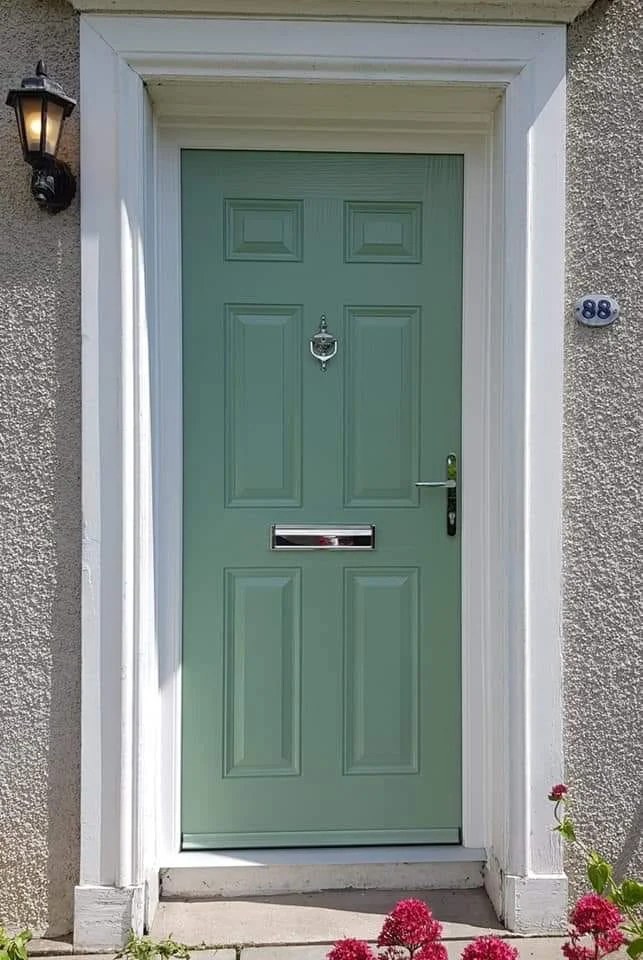
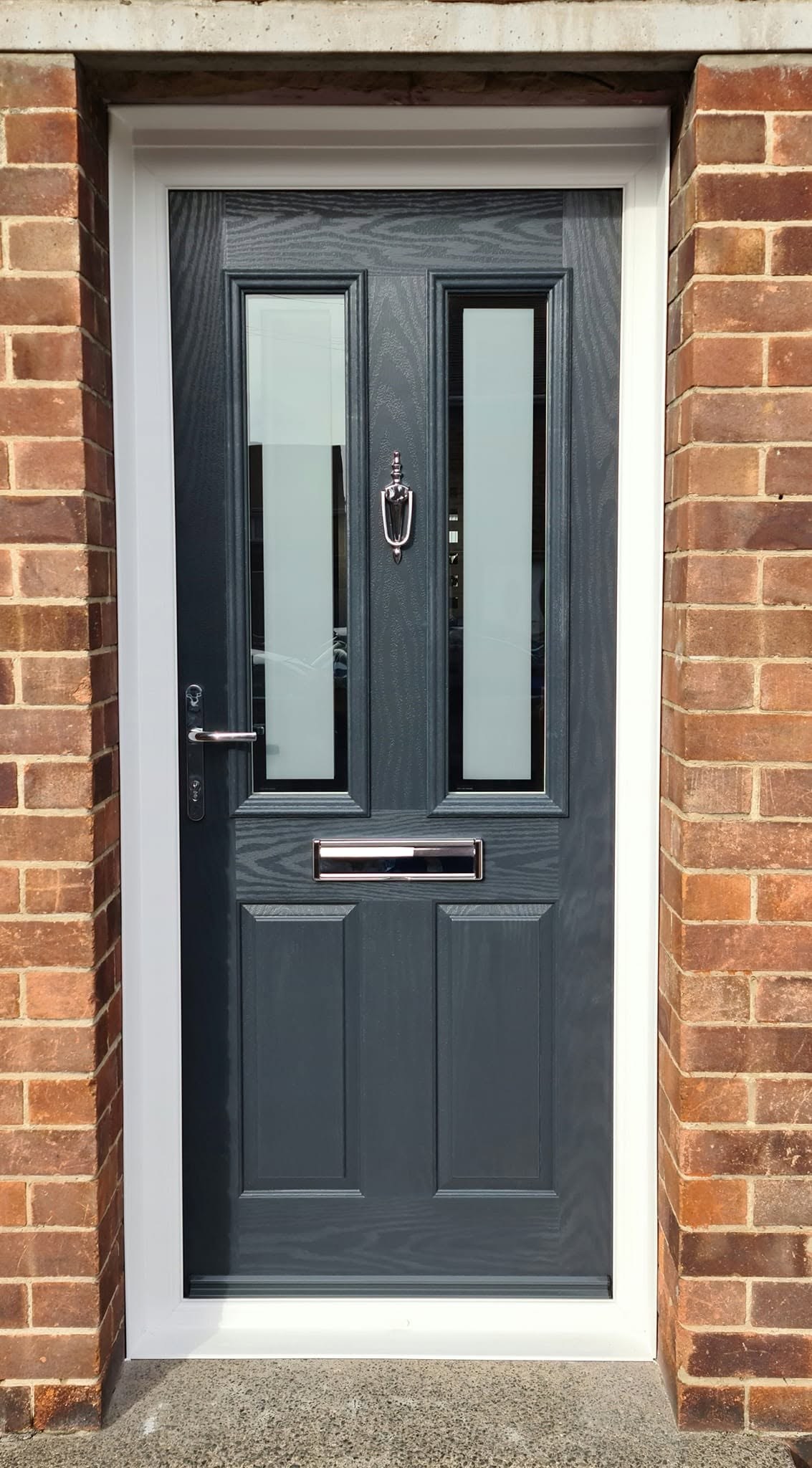
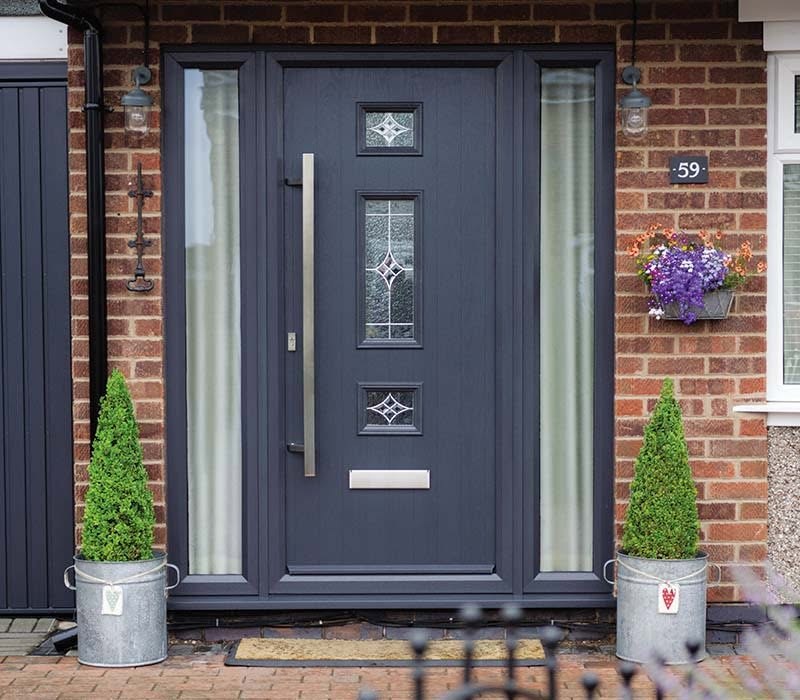
Composite doors are available in a genuinely wide range of colours - anthracite grey, chartwell green, deep blue and traditional oak and rosewood woodgrain finishes are all popular choices across the properties we work on, alongside classic white and black. Glazing options range from fully solid panels through to decorative glazed sections in a range of patterns, letting you balance privacy, natural light and kerb appeal to suit the property. We'll bring samples and talk through what's available for your specific door style during the survey, rather than asking you to choose from a catalogue photo alone.
Composite vs Standard UPVC: Which Is Right for You
Composite costs more upfront than a standard UPVC door - that's the trade-off. What you get for the extra cost is better rigidity, better insulation, a more realistic timber-look finish, and generally a longer working life before the door itself needs attention. For a front door - the one door on the property that takes the most weather exposure and the most daily use, and the one that most affects how the house looks from the street - a lot of homeowners decide the extra cost is worth it. For back and side doors, where appearance matters less and the door's more sheltered, standard UPVC often remains the more sensible choice. We'll give you an honest comparison for your specific situation rather than a blanket recommendation either way.
Common Questions Around Cost and Choice
Composite door pricing varies based on the specific panel design, glazing choice and colour, and it's worth being wary of quotes that seem unusually cheap - the core material and skin quality on a genuinely well-made composite door is what delivers the rigidity and insulation you're paying the extra cost for in the first place, and cutting corners on the core defeats the point of choosing composite over standard UPVC. We supply doors from established manufacturers rather than the cheapest import available, because a composite door that starts flexing or losing its finish within a few years isn't actually the better long-term value it's supposed to be.
It's also worth thinking about hardware finish alongside the door itself - handles, letterboxes and knockers are available in a range of finishes (chrome, black, gold, antique brass and similar) that can be matched or contrasted with the door colour. It's a small detail, but it's the kind of thing that makes the difference between a door that looks fitted and a door that looks finished.
Maintenance
One of the genuine selling points of a composite door is how little maintenance it needs compared to timber. There's no painting, staining or varnishing required - an occasional wipe-down with warm soapy water keeps the GRP skin looking as it did when fitted. The main thing worth keeping an eye on over the years is the hardware - hinges, locks and handles - which, like any door, can need adjustment or repair over time. See our door repairs & hardware page for that side of things.
Our Installation Process
We start with a free, no-obligation survey, measuring the opening properly and talking through colour, style and glazing options that suit the property. You'll get a clear, itemised quote before anything's agreed. Once you're happy to proceed, we book a fitting date and our own tradesmen carry out the work - typically completed within a day, including removal and disposal of the old door and frame, full fitting and sealing, and finishing so the door's ready to use straight away.
Why Choose 1st Fix UPVC for Composite Doors
Composite doors are a bigger investment than a standard UPVC door, which makes the quality of the fitting even more important - a poorly fitted composite door won't deliver the insulation or security benefits it's designed for, however good the door itself is. A door that's not properly squared in its opening, or not sealed correctly around the frame, will draught and underperform regardless of how good the core material is - the fitting is doing at least as much work as the product. Every composite door we fit is installed by our own experienced tradesmen, not subcontracted out, and we stand behind the fitting as well as the product itself.
Areas We Cover
Composite doors supplied and fitted across Newcastle, Gateshead, Durham and Northumberland. Call with your postcode to confirm coverage.
Frequently Asked Questions
Why are composite doors more expensive than UPVC?
The layered construction - solid core, GRP skin, reinforced frame - costs more to manufacture than a standard hollow or foam-filled UPVC panel, and delivers better rigidity, insulation and durability in return.
Do composite doors fade in sunlight?
The GRP skin is significantly more colour-stable than standard UPVC over time, though like any exterior surface, some very gradual fading over many years is normal, particularly on south-facing doors.
Are composite doors draught-proof?
Yes, when properly fitted - the solid core and multi-point locking create a tight seal against the frame, and the insulated construction significantly reduces heat loss compared to a hollow panel door.
Can I get a composite door to match my existing UPVC windows?
Yes - colours are available to complement or match existing UPVC windows and other doors on the property.
How long do composite doors last?
With proper fitting and basic care, composite doors typically outlast standard UPVC doors, often performing well for well over a decade before hardware or minor maintenance issues arise.
Do you fit composite doors on back and side entrances too?
Yes, though most customers reserve the extra cost of composite for the front door and use standard UPVC on less prominent doors - we'll talk through what makes sense for your property.
Get a Free Quote
For composite door installation anywhere across Newcastle, Gateshead, Durham or Northumberland, call 0800 047 2610 for a free, no-obligation quote, or see our full range of services.
WHY CHOOSE
1ST FIX UPVC
Family-run and based right here in Gateshead, we've built our reputation on straight-talking advice, tidy workmanship and fair pricing — not pushy sales tactics.

Trustworthy, Honest & Reliable
A trustworthy local company serving Gateshead, Tyne and Wear and the North East.

Experienced Tradesmen & Fitters
No fuss, no hassle — just experienced, trusted fitters and tradesmen.

Lowest Prices Around!
No costly links in the chain — just top quality service and honest advice.